Circus Maximus
The largest stadium ever built by ancient Rome — still there, still walkable, still yours.
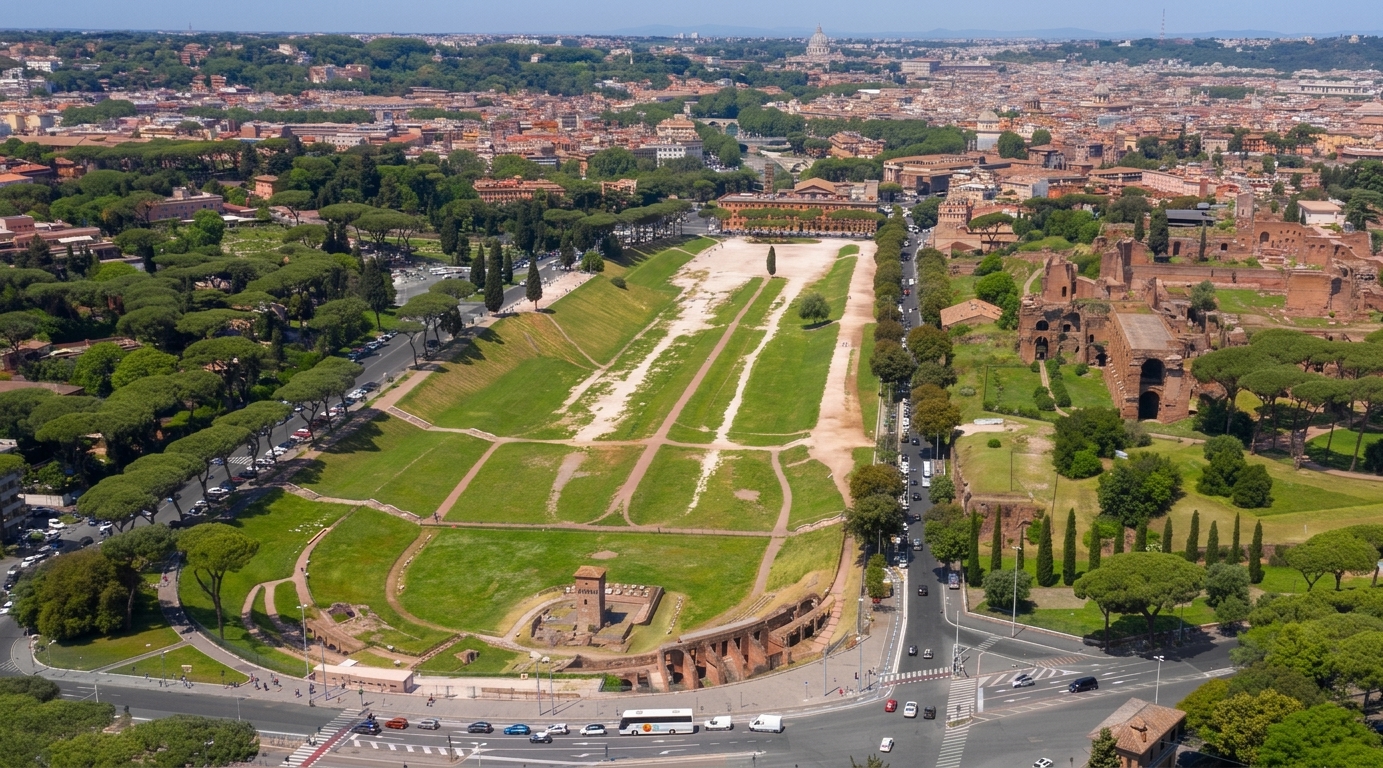
Twenty-five minutes on foot from The Rabbit Hole, across Ponte Palatino at the base of the Aventine hill, opens the enormous grassy hollow of the Circus Maximus — Circo Massimo to Romans. There is almost nothing left of the marble tiers and the starting gates, but there does not need to be. The scale of the empty space still tells you everything you need to know about how large ancient Rome could dream.
The largest stadium in history
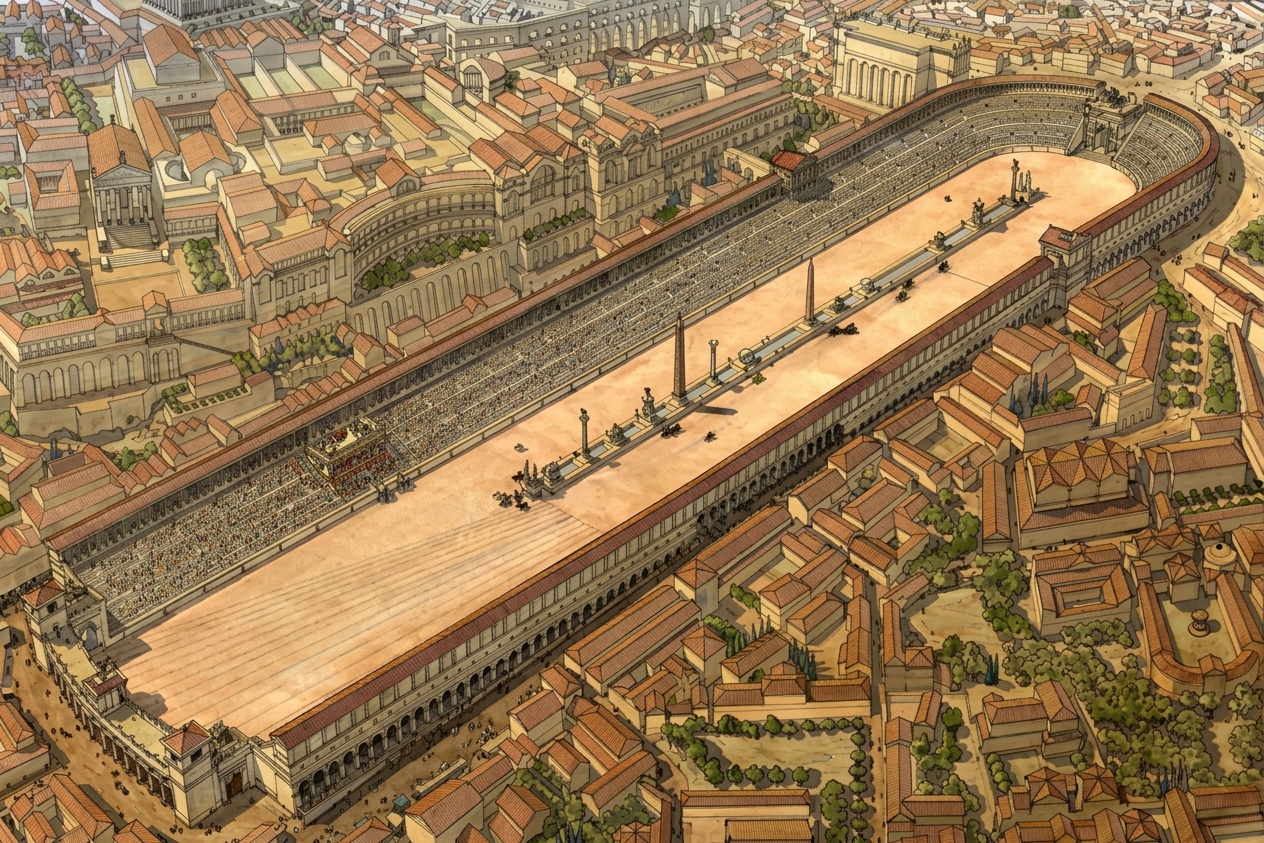
The Circus was traditionally traced back to the 6th century BC, when the last kings of Rome are said to have laid out a track in the valley between the Palatine and Aventine hills. Over the following centuries it grew into the largest sports venue any civilisation had ever built — a stadium more than six hundred metres long, capable of holding over 150,000 spectators. For comparison, no venue that big would be built again anywhere in the world for almost two thousand years.
The heart of Roman life happened here. Chariot races — the ludi circenses — were staged on public holidays that could stretch for two weeks at a time. Twelve quadrigae (four-horse chariots) would burst out of the starting gates at once and race seven laps counter-clockwise around the spina — the raised central barrier decorated with obelisks, statues and lap-counting bronze dolphins. Two of the ancient Egyptian obelisks that once stood on the spina are still in Rome: one now dominates Piazza del Popolo, the other stands in front of San Giovanni in Laterano.
Roman spectators divided themselves fanatically into four teams — the Blues, Greens, Reds and Whites — with all the passion, tribal loyalty and occasional street violence of a modern football crowd. Emperors backed their favourites. Charioteers, most of them slaves and freedmen, became celebrities richer than senators. The most famous of them all, Gaius Appuleius Diocles, retired after 4,257 races with earnings that translate today into hundreds of millions of dollars — arguably making him the highest-paid athlete in history.
The last race here was held in AD 549, more than a thousand years after the first. Then the Empire faded, the marble was carted away for other buildings, and the great oval slowly returned to grass.
What you can see today
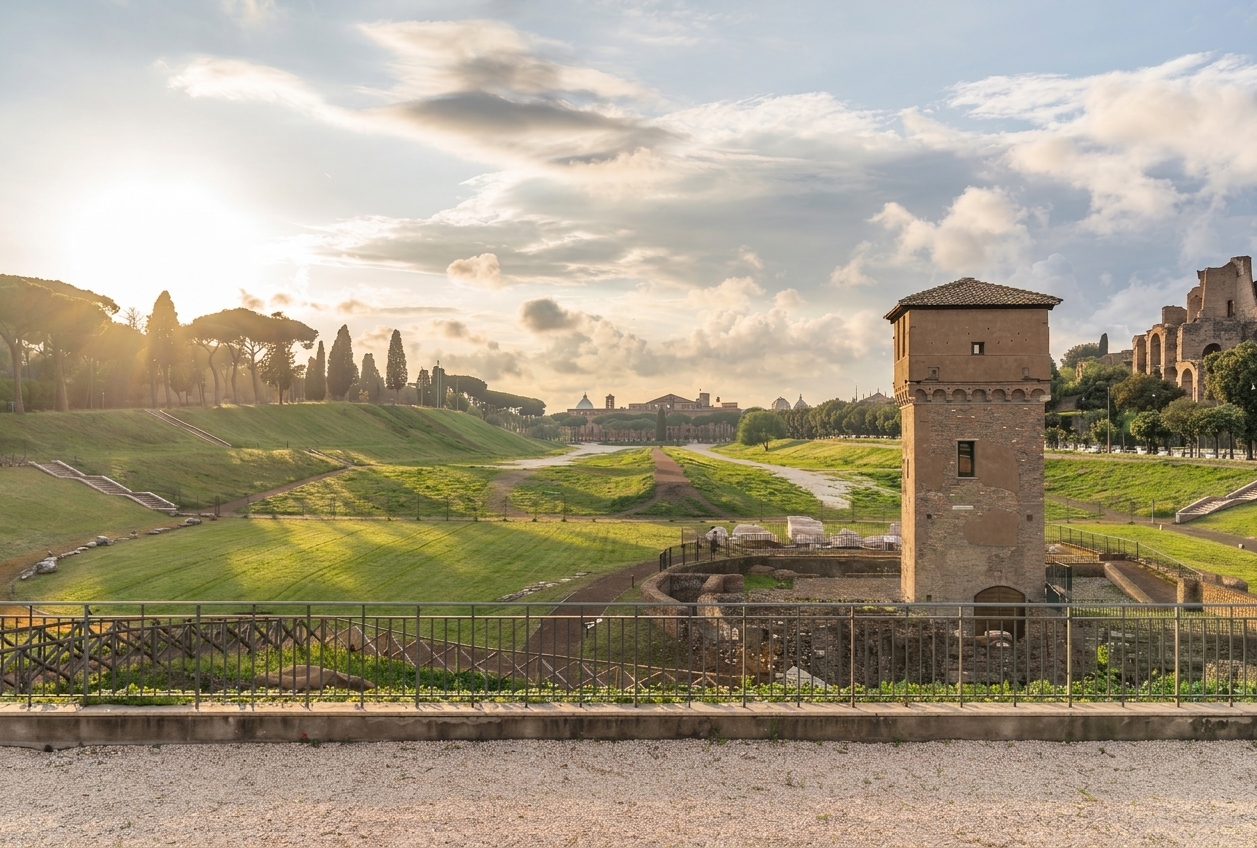
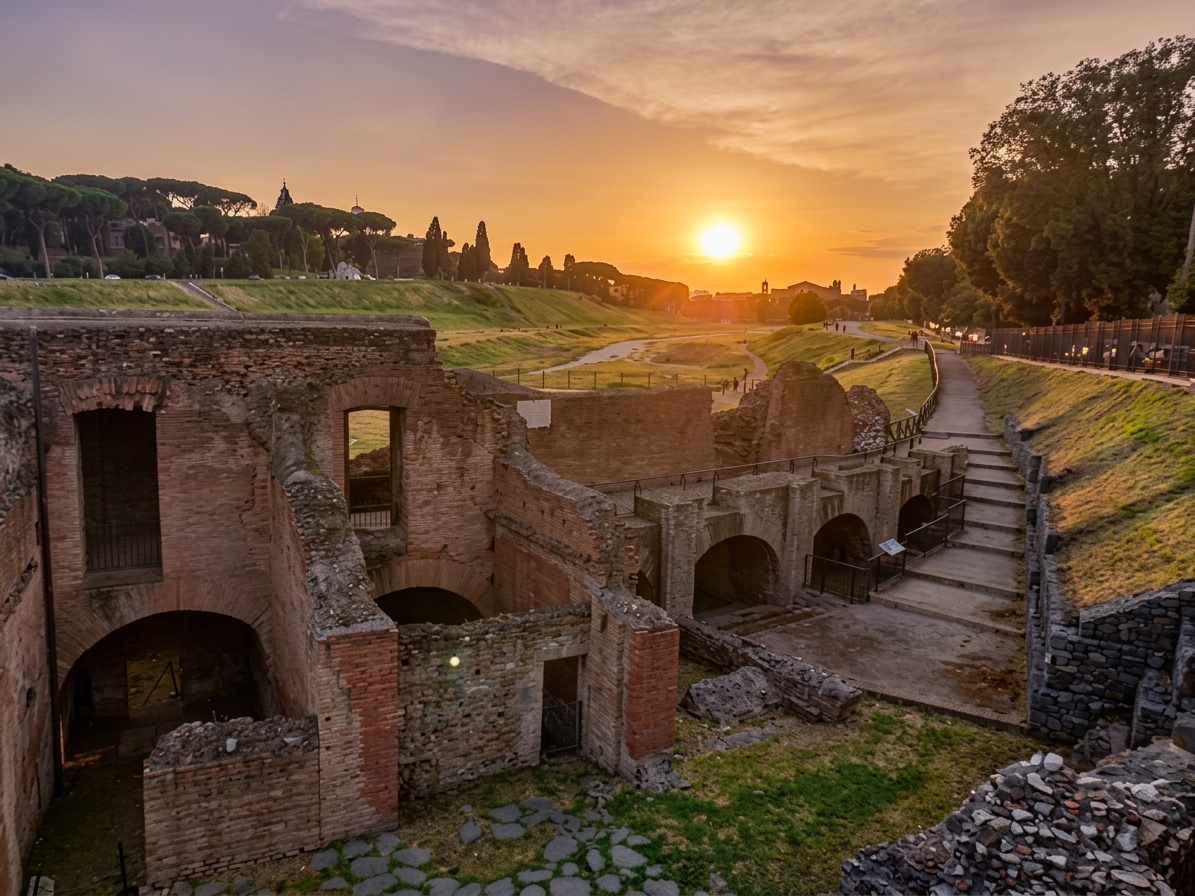
Not much of the ancient structure survives — a small section of curved brick foundations at the eastern end, the outline of the imperial box on the Palatine slope, the base where one of the obelisks once stood. But that is not the point. The Circus Maximus is one of the great empty spaces of Rome, and its emptiness is what makes it powerful.
The park. Today the whole oval is a huge public lawn, used by Romans to walk their dogs, jog, sunbathe, or lie under the pines at sunset. Come at dawn, and it is one of the most peaceful places in the city.
The view of the Palatine. From the northern side of the Circus you look straight up at the ruins of the imperial palaces on the Palatine Hill — the same view the ancient spectators would have had while cheering their team from below.
Concerts and gatherings. The Circus has become again what it was two thousand years ago — the great open-air arena of Rome. The Rolling Stones, Bruce Springsteen, Genesis and Italy’s football World Cup celebrations have all packed the oval in recent decades, drawing crowds that finally rival the ancient ones.
Circo Maximo Experience. At the eastern end of the Circus, a small ticket gives access to the excavated ruins — and sometimes to an augmented-reality tour that reconstructs the ancient stadium digitally around you. Ask at the booth when you arrive; it is one of the few good AR experiences in Rome.
What to see nearby
Bocca della Verità. A few minutes from the eastern end of the Circus, in the porch of the small medieval church of Santa Maria in Cosmedin, hangs one of Rome’s most photographed objects: a huge ancient marble mask — probably a Roman drain cover — whose gaping mouth, according to legend, will bite off the hand of any liar who dares put his fingers inside. Since Audrey Hepburn and Gregory Peck tried it in Roman Holiday in 1953, the queue has never really stopped.
The Temple of Hercules Victor. Just outside the church, in the ancient Forum Boarium (the cattle market of Republican Rome), stands a small round temple often mistakenly called the “Temple of Vesta” because of its shape — in fact dedicated to Hercules the Victor. Built in the 2nd century BC, it is the oldest surviving marble building in Rome.
The Temple of Portunus. Right next to it, a rectangular temple to the god of harbours, in an astonishing state of preservation — the pillars still standing exactly as the Republican Romans left them.
Isola Tiberina. On the way back to Trastevere, add a five-minute detour across Isola Tiberina and past Ponte Rotto — two thousand more years of Roman history, hiding in plain sight in the middle of the river.
Practical information
- Where: Via del Circo Massimo, between the Palatine and Aventine hills.
- How to get there on foot from The Rabbit Hole: Leave on Via Napoleone Parboni, walk down Viale Trastevere, cross the Tiber at Ponte Palatino, pass under the base of the Aventine Hill — and the great oval opens in front of you. Twenty to twenty-five minutes at a comfortable pace, past some of the most beautiful everyday views in Rome.
- Entry: Free — the Circus is a public park, open at all times.
- Ticketed area: Small ticket for the excavations and (when available) the augmented-reality experience at the eastern end.
- Best time to visit: Late afternoon into sunset. From the Palatine side you get one of the most cinematic views in Rome as the light fades over the imperial palaces.
The Colosseum has the crowds. The Circus Maximus has the space. Come to feel how big ancient Rome could really be — and to walk where a hundred and fifty thousand people once stood shouting for the Blues. 🌿🕊️✨
#TheRabbitHoleRome #DiscoverRome #CircusMaximus #AncientRome #HiddenGems