The Crypta Balbi
Two thousand years of Rome, stacked under a single city block.
Cross the Tiber from Trastevere at Ponte Garibaldi and walk five minutes east, past Largo Argentina, and you’ll find yourself in front of a plain modern doorway on Via delle Botteghe Oscure. Almost nobody stops.
Yet inside — and beneath — this unassuming address lies one of the most extraordinary archaeological sites in Rome: not a single monument, but the compressed history of an entire city block that has been continuously inhabited from the age of Augustus to the twentieth century.
The theatre that became a neighbourhood
In 13 BC, the Roman general Lucius Cornelius Balbus — freshly triumphant from campaigns in North Africa — built a great theatre in the Campus Martius. Attached to it was a large porticoed courtyard, the Crypta Balbi, where spectators could stroll between performances or take shelter from the rain.
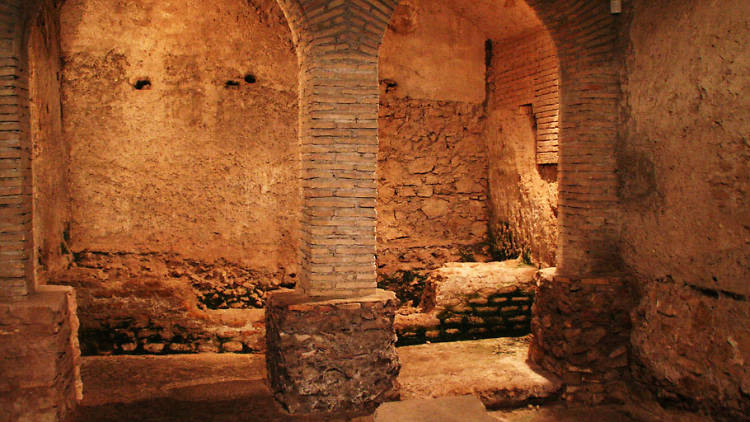
The travertine and grey tuff walls of that portico still stand today, buried inside the modern buildings above.
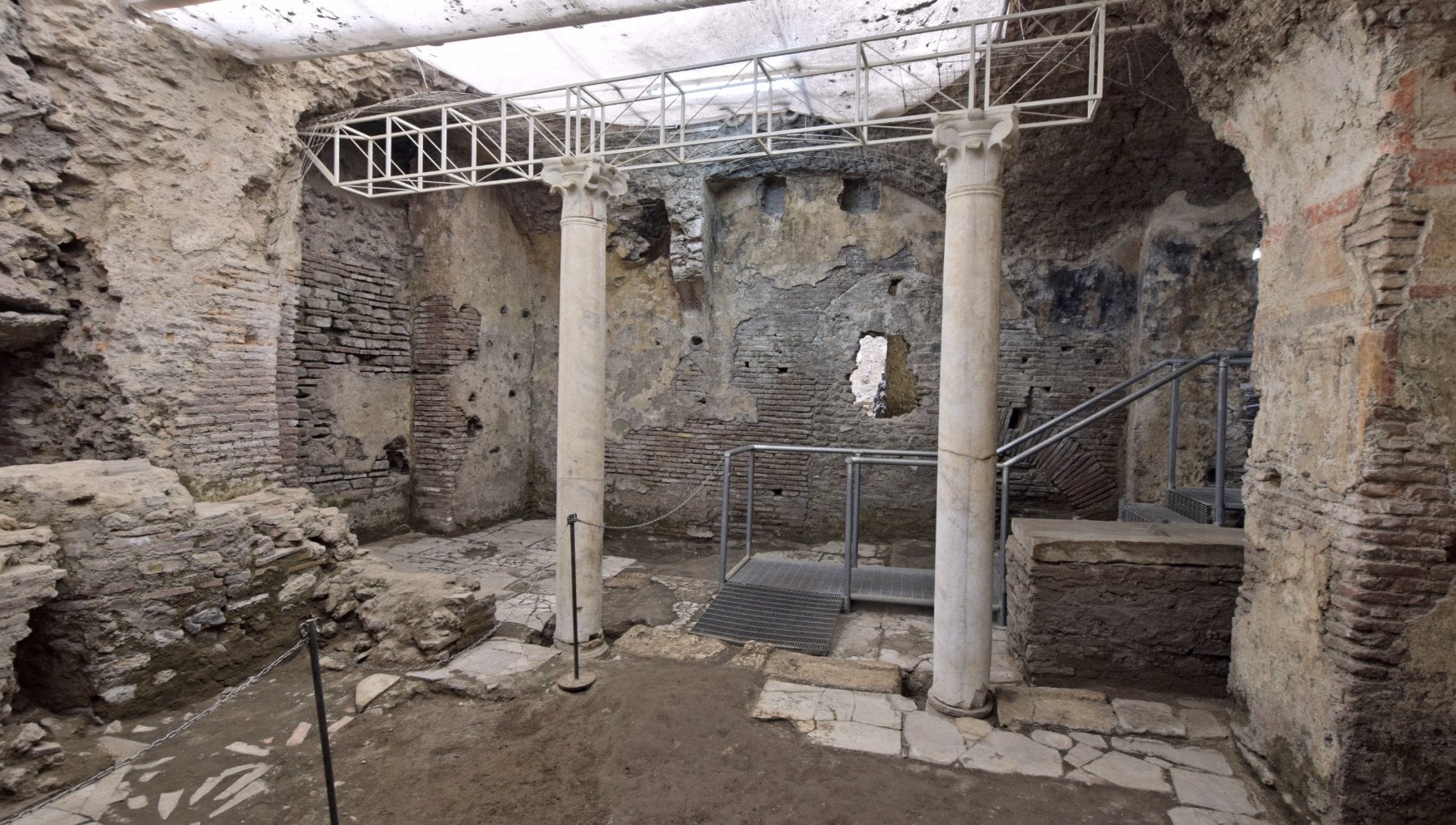
What makes this place unique is what happened next. When the imperial theatre fell out of use, the vast covered space of the crypta was reused. Workshops moved in. A small dyeing plant — a fullonica — was built into one corner in the 2nd century AD. Alongside it, a sacellum dedicated to an eclectic mix of Greek and Eastern gods (Artemis, Aphrodite, Isis, Dionysus) served a mixed and cosmopolitan population. A mithraeum opened on another side, later converted into a stable. Metalworking furnaces followed.
Then houses. Then a medieval convent. Then churches. Then a nineteenth-century conservatory. Every generation built on top of the last, and every generation left something behind.
Rome as a section drawing
The site was rescued from oblivion almost by accident. When the old buildings of the block were demolished in the 1940s, the ground lay abandoned for decades. In 1981 the Special Superintendency for the Archaeological Heritage of Rome acquired the whole plot and began a project that is now considered a landmark in the history of urban archaeology.
For the first time, the goal was not to recover isolated treasures but to reconstruct — layer by layer, floor by floor, potsherd by potsherd — the complete life of a single piece of the ancient city, from the Augustan theatre down to the plates broken in the seventeenth century.
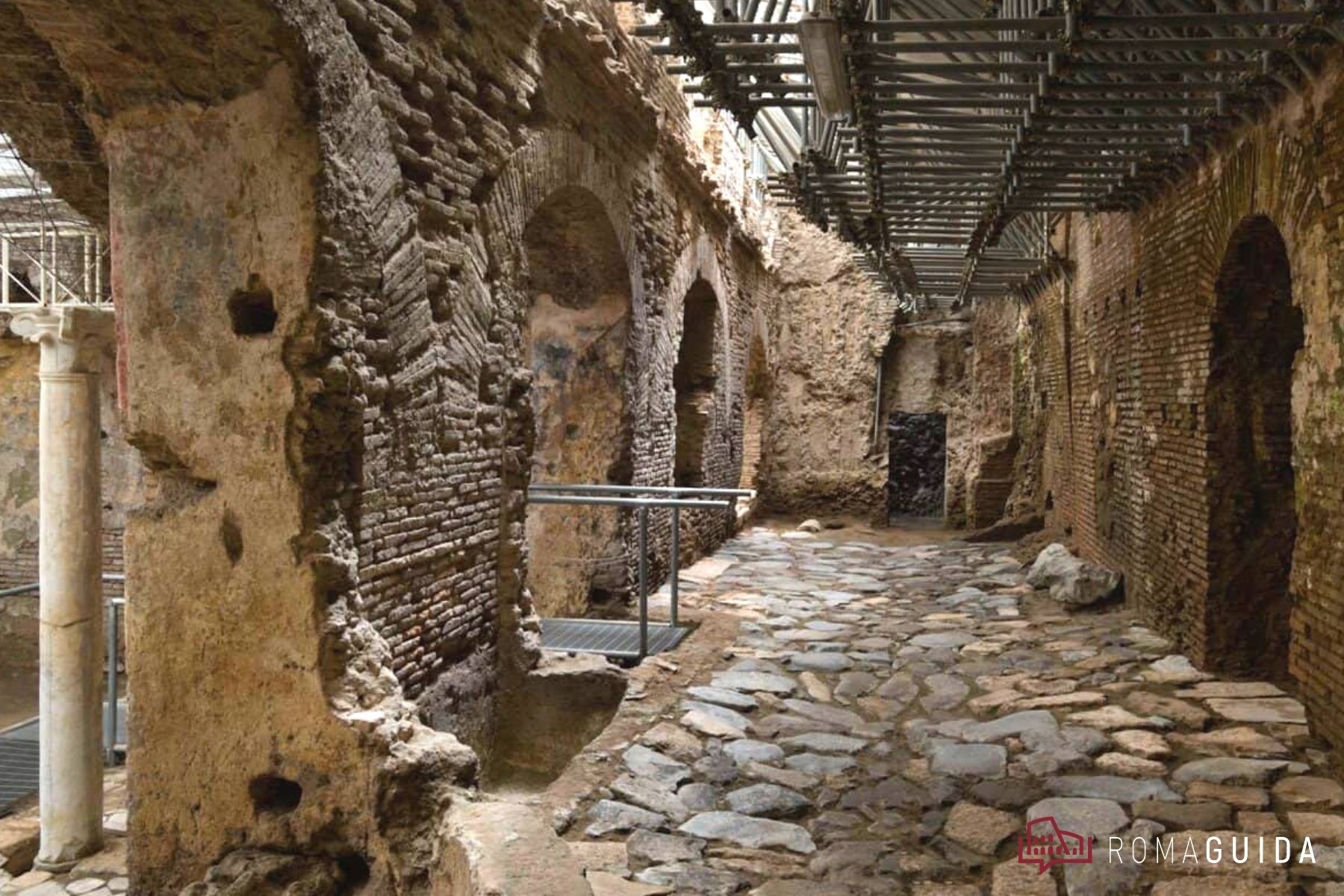
The result is a place where the practice of archaeology is as visible as the finds themselves. Walking through the Crypta Balbi, you notice that the paving changes as you move: opus spicatum in one section, Roman basolato in another.
Those are not decorative choices; they mark the different campaigns of excavation. You are literally walking through forty years of research.
What to see
The Roman portico. As soon as you enter, you stand in front of the original wall of the crypta itself — massive travertine and grey tuff blocks, exactly as Balbus built them in the last decade before Christ.
The underground archaeological area. A guided descent takes you through the layered ruins beneath the museum: the mithraeum, the fullonica with its cocciopesto basins and drainage channel, the sacellum with its sculptural fragments, a Roman kitchen full of pottery, and a workshop with its furnaces for metalworking.
The museum of daily life. Upstairs, the collection is dedicated not to emperors and generals but to the objects of ordinary Romans — “the rich and the less rich”, as the curators put it. Amphorae recovered from an ancient rubbish dump. Glass bottles broken and discarded two thousand years ago. Medieval and Renaissance ceramics. Fragments of clothing. A bronze acquamanile — a basin for washing hands — engraved with the head of the god Ocean.
The sacellum sculptures. The most recent additions to the exhibition are the marble fragments of the gods once venerated in the small shrine: Artemis and her hunter Meleager, Aphrodite, Isis, and a joyful Dionysus. A quiet reminder that ancient Rome was never one culture but many, layered together like the walls that once held them.
The insider tip
The Crypta Balbi is one of the four sites of the Museo Nazionale Romano, together with Palazzo Massimo, Palazzo Altemps, and the Baths of Diocletian. A single combined ticket, valid for a week, gives access to all four. If you plan more than one visit to ancient Rome, the combined ticket pays for itself immediately — and Palazzo Altemps in particular, with its extraordinary collection of ancient sculpture, is worth pairing with the Crypta Balbi on the same afternoon.
Practical information
– Where: Via delle Botteghe Oscure 31, a few steps from Largo Argentina. About thirty minutes on foot from The Rabbit Hole, or a short ride on tram 8 from Trastevere to Piazza Venezia.
– Entry: Combined ticket for the four sites of the Museo Nazionale Romano — good value for a week of ancient Rome.
– Opening hours: Every day except Monday. Always worth a check on arrival for seasonal closures.
– Guided visits to the underground area: Free, several times a day. Book at the ticket desk on the same day.
– Combine with: a slow walk back to Trastevere along the river, past Isola Tiberina and Ponte Rotto — twenty minutes of easy sightseeing, and two thousand more years of Roman history.
Most visitors chase Rome’s most famous monuments and see only the surface of the city. The Crypta Balbi does the opposite: it opens up a single square of pavement and shows you everything that has ever happened there. If you want to understand how Rome actually became Rome — one broken pot, one repurposed wall, one generation at a time — this is the place to start. 🌿🕊️✨
#TheRabbitHoleRome #DiscoverRome #CryptaBalbi #AncientRome #HiddenGems