Emporium Rome
The Ancient River Port
Rome’s forgotten port, still lying under the streets of Testaccio.
Fifteen minutes south of The Rabbit Hole, in the modern neighbourhood of Testaccio, run the remains of what was once the beating heart of the ancient Roman economy — the Emporium, the great river port that fed the city and the empire for more than five hundred years. Almost no tourist itinerary mentions it. Yet the streets you walk here still trace the outline of the docks, the warehouses and the customs offices where the grain of Egypt, the olive oil of Spain and the wine of Gaul were unloaded to feed a million Romans a day.
The port that fed a million people
From the 3rd century BC to the 3rd century AD, the Emporium was the main river port of Rome. Ships coming up the Tiber from Ostia — where seagoing vessels could not travel further inland — transferred their cargoes here onto smaller barges, or unloaded directly onto the great stone docks along the bend of the river.
The scale of the operation is hard to overstate. Rome’s population had reached around a million people by the 1st century AD, and virtually all of them ate imported wheat. Every year hundreds of thousands of tonnes of grain, wine, olive oil, marble, timber, spices, textiles and building materials passed through this narrow stretch of Tiber shore. The state grain distribution — the annona, which fed the poorer citizens for free — was managed from warehouses lined up along the quays.
The Emporium was more than a port: it was a whole commercial city. Docks and mooring rings. Long rows of horrea, the vast state warehouses. Customs offices. Weighing stations. Shops. Guild halls. Whole gangs of freedmen and slaves lived and worked here, in one of the most cosmopolitan neighbourhoods of ancient Rome.
What remains today
Not much of the ancient port stands above ground — but a great deal is preserved just below the pavement, embedded in the walls of nearby buildings, and in one extraordinary monument you can see from a mile away.
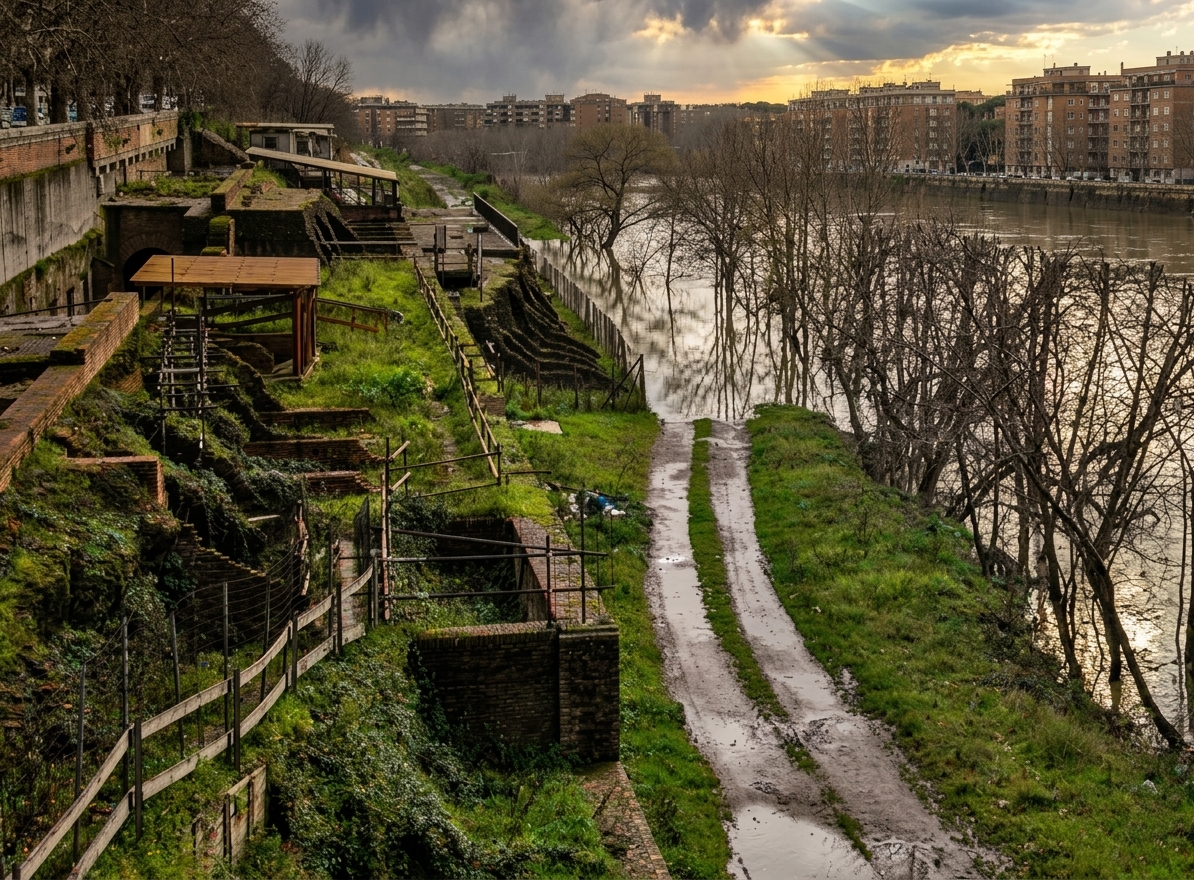
The Tiber walls and dock structures. Along Via del Porto Fluviale and near Ponte Testaccio, sections of the ancient opus caementicium walls and mooring stones are still visible from the modern riverside. Walk along the Lungotevere Testaccio and look down: you are looking at the actual quays where imperial cargoes were landed.
The remains inside the Testaccio Market. When the new covered market of Testaccio was built in the early 21st century, the excavations uncovered so many ancient road pavements and merchants’ cippi that the architects incorporated them into the modern building. You can walk on Roman paving stones while buying fresh mozzarella and puntarelle.
Monte Testaccio. The most astonishing survival of the Emporium is not a wall — it is a hill. An entirely artificial hill, about 35 metres high and a kilometre around, made almost exclusively of broken amphorae. An estimated 53 million of them, mostly used to ship Spanish olive oil, discarded here over three centuries because their porous clay had absorbed the oil and could not be reused. It is one of the largest ancient rubbish dumps in the world, and the only Roman monument in existence made entirely of trash. On its slopes you can still find amphora fragments stamped with the names of the Spanish shippers who exported them from Baetica two thousand years ago. Access to the top of the hill is by guided tour only — worth asking at the Sovrintendenza Capitolina if you are curious.
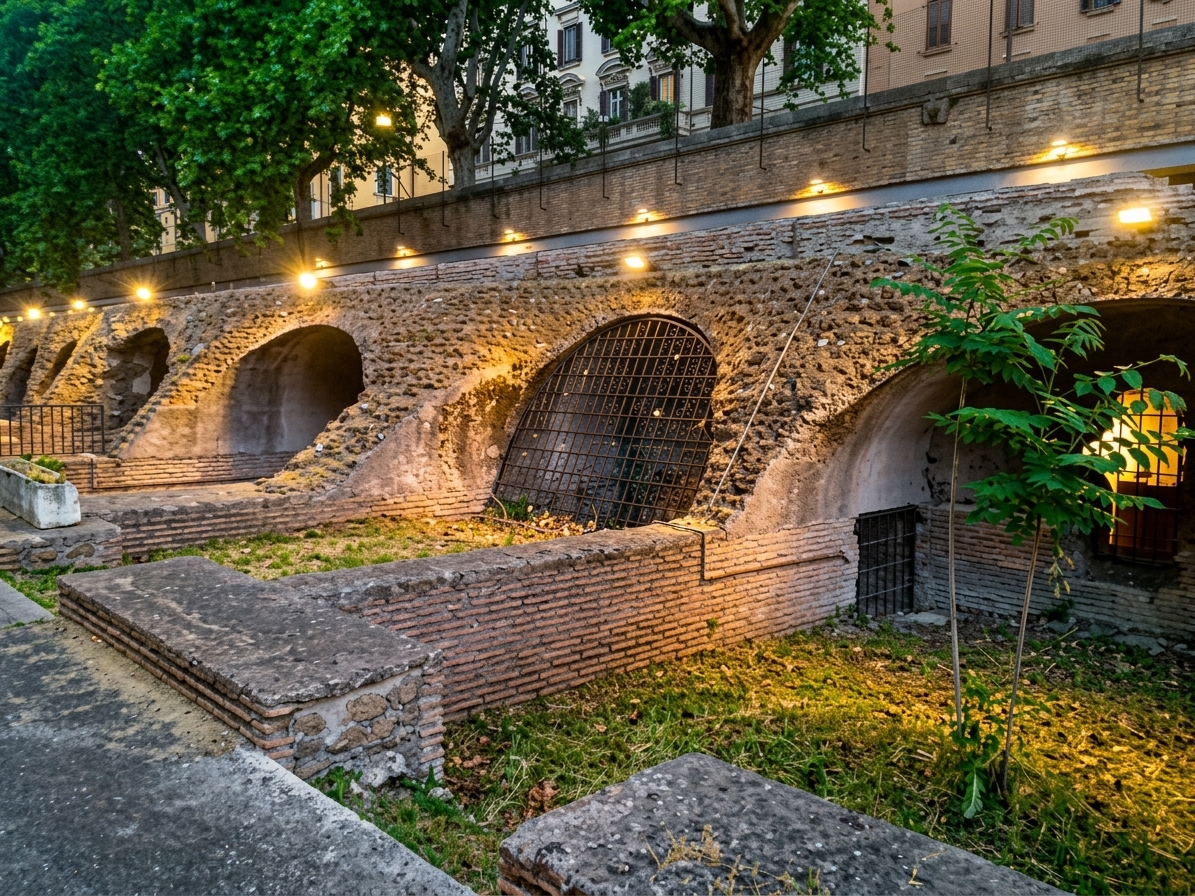
The Porticus Aemilia. Just five hundred metres north of The Rabbit Hole, on the river side, stands the largest surviving warehouse of the ancient world — see our separate guide for the full story. It was the direct partner of the Emporium: goods unloaded at the port were stored here, awaiting distribution across Rome.
Testaccio: Rome’s food quarter, then and now
The most beautiful thing about the Emporium is that its logic has never really changed. Two thousand years after the last Roman ship unloaded on these docks, Testaccio is still the food neighbourhood of Rome. The ex-slaughterhouse (Mattatoio), the daily food market, the historic trattorias of Via Galvani and Via Mastro Giorgio, the wine bars carved directly into the flank of Monte Testaccio itself — all of it is a continuation, quarter after quarter, of what began here as an ancient port. Rome forgets nothing that once fed it.
An archaeological walk from The Rabbit Hole
If you want to spend half a day exploring this ancient landscape, here is the route to follow:
Porticus Aemilia. Six minutes on foot from The Rabbit Hole. The great Roman warehouse that received the goods landed at the port.
Emporium and the Tiber docks. Continue south along Via del Porto Fluviale to the river. Look down over the ancient quays and imagine thousands of ships a year unloading here.
Testaccio Market. A ten-minute walk inland. Roman roads embedded in the floor of a working food market — and one of the best places in the city for a quick, honest Roman lunch.
Monte Testaccio. Five minutes further south. The hill of amphorae, hidden in plain sight behind the market.
Pyramid of Cestius and the Non-Catholic Cemetery. Fifteen minutes on. A perfectly preserved Egyptian-style Roman pyramid from 12 BC, right next to the peaceful cemetery where Keats, Shelley and Gramsci are buried.
Practical information
- Where: Along Via del Porto Fluviale, Via Marmorata, and the Lungotevere Testaccio. Twelve to fifteen minutes on foot from The Rabbit Hole.
- How to get there: Walk south along Via Napoleone Parboni to Via Marmorata, then continue towards Piazza dell’Emporio. Bus H, N8 and 170 all serve the area.
- Entry: The archaeological remains along the river are free and open at all times.
- Guided tours: For access to restricted areas (Monte Testaccio, some sections of the ancient warehouses) look for tours organised by the Sovrintendenza Capitolina or by specialised cultural associations.
- Best time to visit: Late morning, so you can end your walk with lunch at the Testaccio Market — the most authentic and least touristy food market in central Rome.
- Combine with: Ostia Antica, the seaport that fed the river port that fed Rome — one hour by train from here, and the perfect complement to a visit to the Emporium.
The Colosseum shows you how Rome entertained a million people. The Emporium shows you how it fed them. Standing on these forgotten quays, with an amphora fragment in one hand and a supplì from the market in the other, you understand the empire from a completely different angle. 🌿🕊️✨
#TheRabbitHoleRome #DiscoverRome #Emporium #Testaccio #AncientRome