Santa Cecilia in Trastevere
A hidden masterpiece just around the corner from The Rabbit Hole.
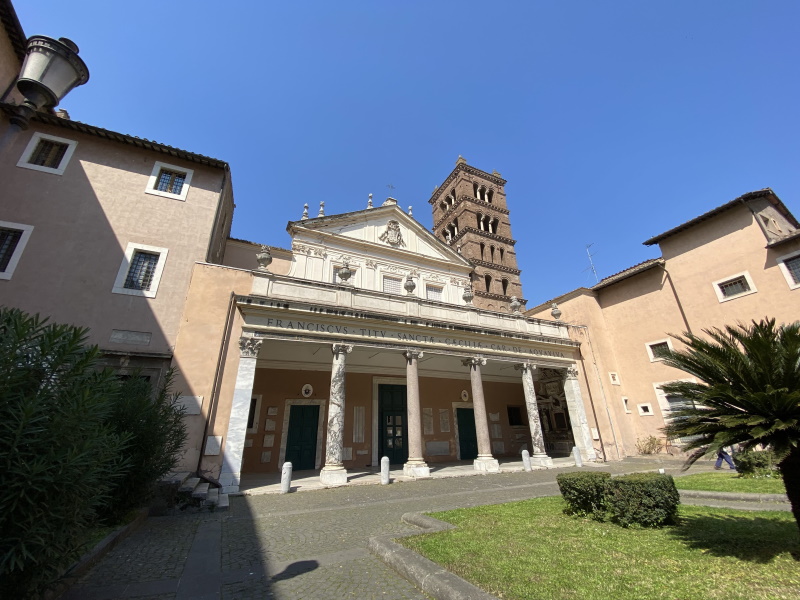
If you stay with us in Via Napoleone Parboni, you’re only a ten-minute walk from one of the most extraordinary — and most overlooked — churches in Rome. While most visitors queue for hours at the Vatican Museums, Santa Cecilia in Trastevere sits quietly behind a walled garden, hiding treasures that span more than a thousand years of art and faith.
The saint and her house
Cecilia was a young Roman noblewoman martyred for her Christian faith around the 3rd century. According to tradition, she was condemned to die by suffocation in the caldarium — the hot room — of the bath house inside her own home. When that failed, a soldier was sent to behead her, but he struck three blows and left her still alive. She survived for three more days, sheltering the Christian community with her final words.
The basilica you visit today was built directly over the remains of her house. You can still descend into the ancient Roman rooms beneath the church.
What to see
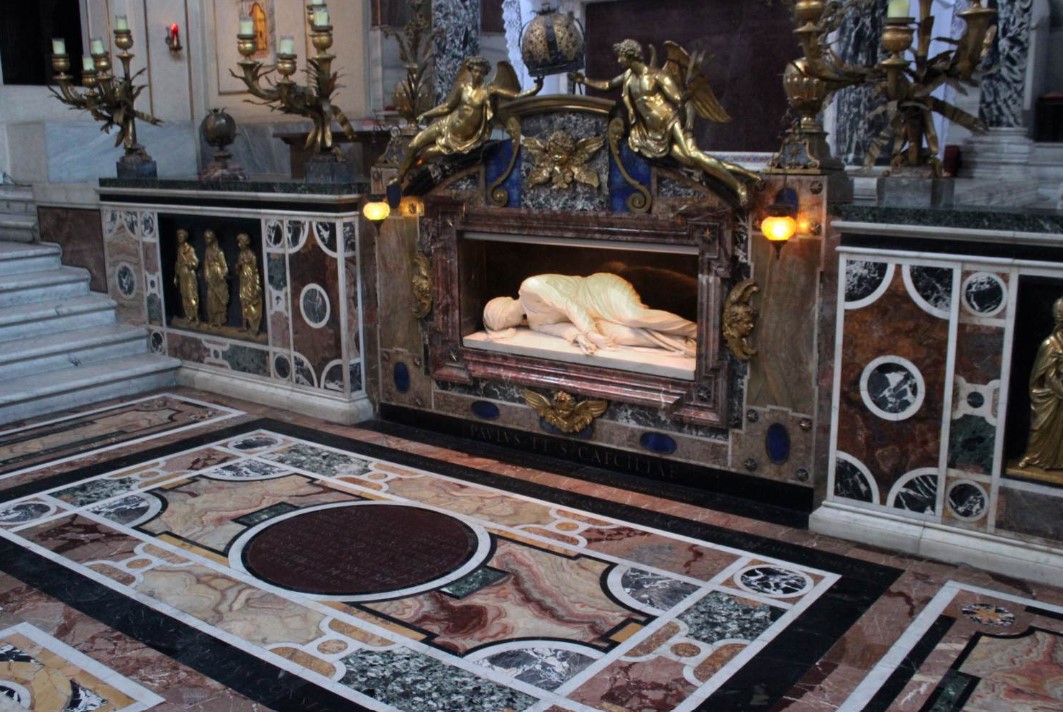
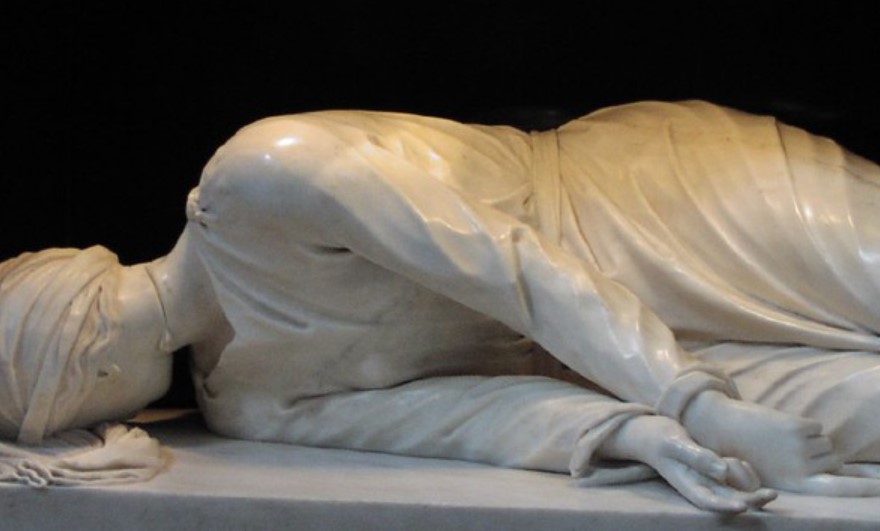
The statue by Stefano Maderno. In 1599, Pope Clement VIII ordered the saint’s tomb to be opened. Witnesses reported that her body appeared incorrupt, curled on its side with the marks of the three sword blows still visible on the neck. The sculptor Stefano Maderno, only in his early twenties at the time, was allowed to see the body and carved her exactly as she lay. His marble statue rests beneath the main altar and remains one of the most quietly moving works in Rome — the saint appears not dead, but sleeping.
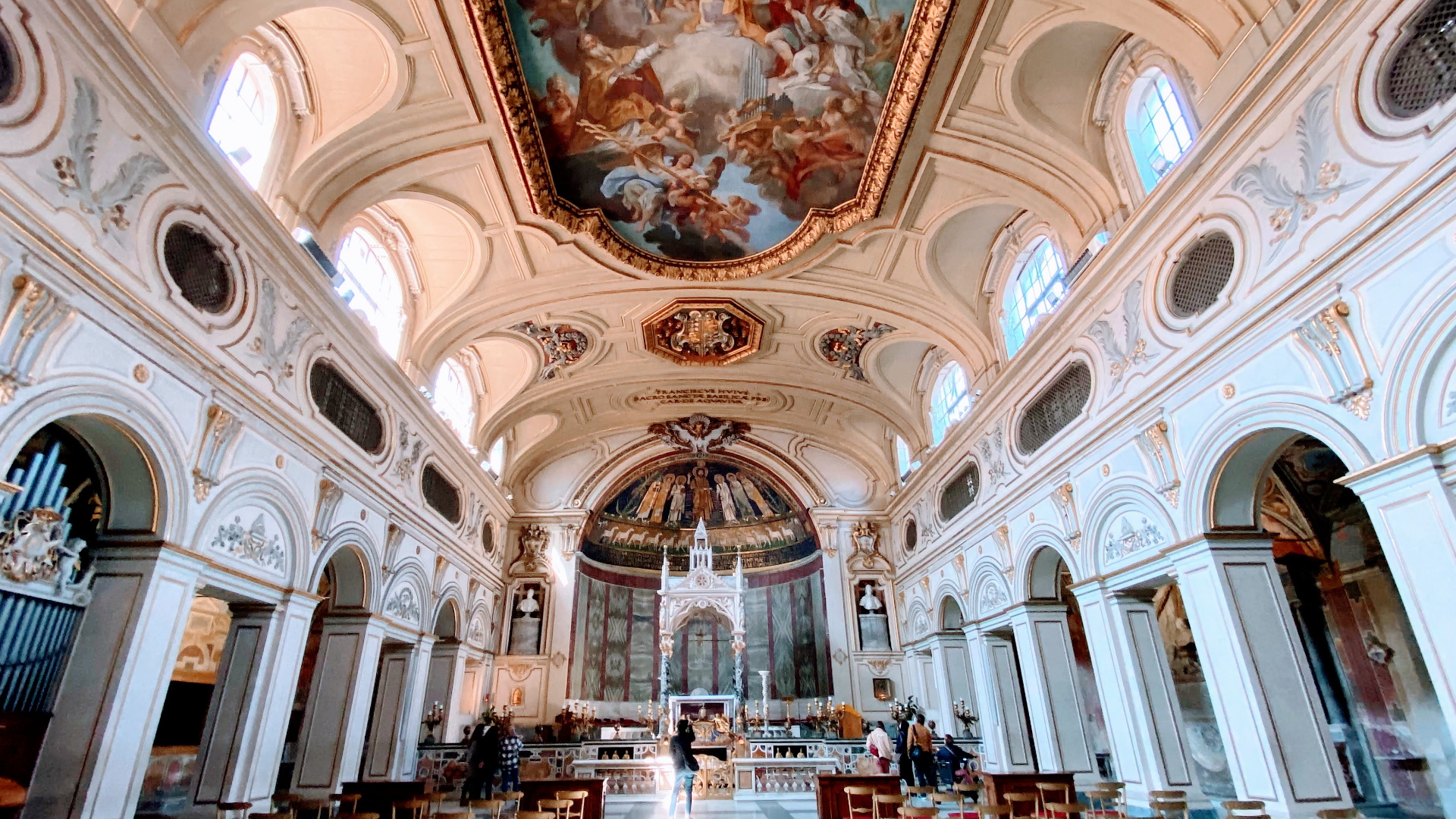
The apse mosaic. Above the altar, a golden 9th-century mosaic commissioned by Pope Paschal I shows Christ blessing the faithful, flanked by saints and by Paschal himself holding a model of the church. The blue-and-gold background glows even on grey winter mornings.
Arnolfo di Cambio’s ciborium. The Gothic canopy over the altar was carved in 1293 by Arnolfo di Cambio — the same architect who designed the cathedral of Florence. It is one of the finest works of medieval sculpture in Rome, and almost nobody knows it is here.
The Roman house below. For a small ticket, you can descend into the excavations under the church: brick walls from the 2nd and 3rd centuries, a large tannery room, mosaics, and what tradition identifies as the caldarium where Cecilia was condemned.
The real insider tip: Cavallini’s Last Judgement
This is the reason people who love art come to Santa Cecilia.
On the upper floor of the church, in the coro delle monache — the cloistered choir of the Benedictine nuns who still live here — you can see a fresco of the Last Judgement painted by Pietro Cavallini between 1289 and 1293. It is one of the earliest and most revolutionary works of Italian painting: the moment when the flat, hieratic style of the Byzantine tradition begins to open into real volume, real weight, real emotion. Without Cavallini, there is no Giotto.
The catch? The nuns open the choir to visitors only for a short window each morning, usually on weekdays. The entrance is a small unmarked door to the left of the church — you have to ring the bell. The visit is short, the ticket symbolic, and the room almost always empty.
The best part? You will very likely have Cavallini all to yourself.
Practical information
- Where: Piazza di Santa Cecilia 22, in the heart of Trastevere
- How to get there: A short walk from The Rabbit Hole through the alleys of Trastevere. No bus needed.
- Church: Free entry, open every day.
- Roman excavations and Maderno’s crypt: Small ticket at the desk on the right.
- Cavallini fresco: Access to the coro delle monache is limited to a short morning window and may vary. Always check on arrival — and don’t be shy to ring the bell.
A tip from us: pair your visit with a walk to Santa Maria in Trastevere (five minutes away, with the mosaics of Cavallini in the apse — same artist, different masterpiece) and stop for a coffee in one of the tiny piazzas along the way.
Rome doesn’t reveal her best secrets to the crowds — she reserves them for those who take the time to knock on the right door. 🌿🕊️✨
#TheRabbitHoleRome #DiscoverRome #HiddenGems #Trastevere #Cavallini