Vatican City
The smallest country in the world, and the largest church.
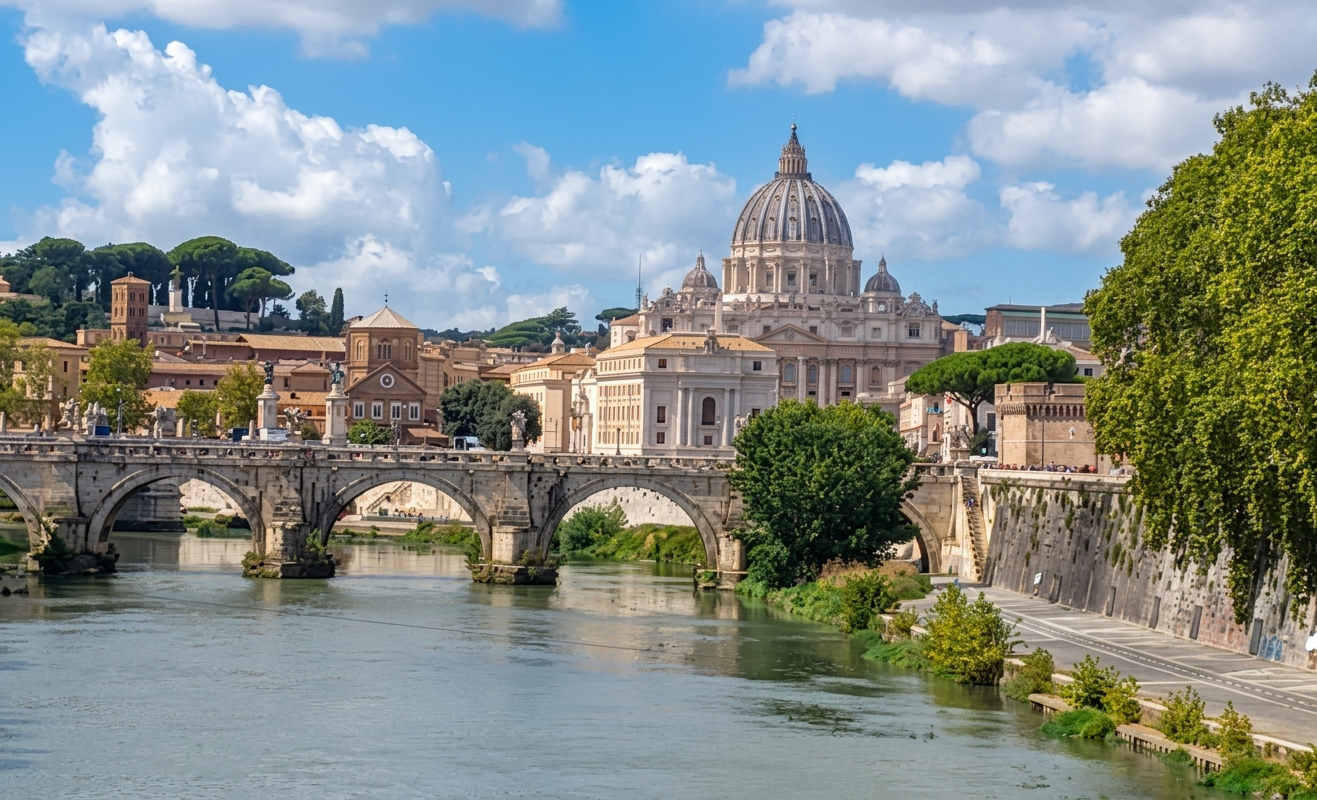
Half an hour on foot from The Rabbit Hole, across the Tiber, opens the tiniest sovereign state on Earth — the Vatican City, a country of forty-nine hectares that has been the spiritual centre of the Catholic world for two thousand years. Behind its walls stand the largest church ever built, one of the greatest art collections in existence, and — hidden among the cobblestones outside the square — a small stone in the shape of a heart that generations of pilgrims have quietly turned into a treasure hunt.
A city inside a city
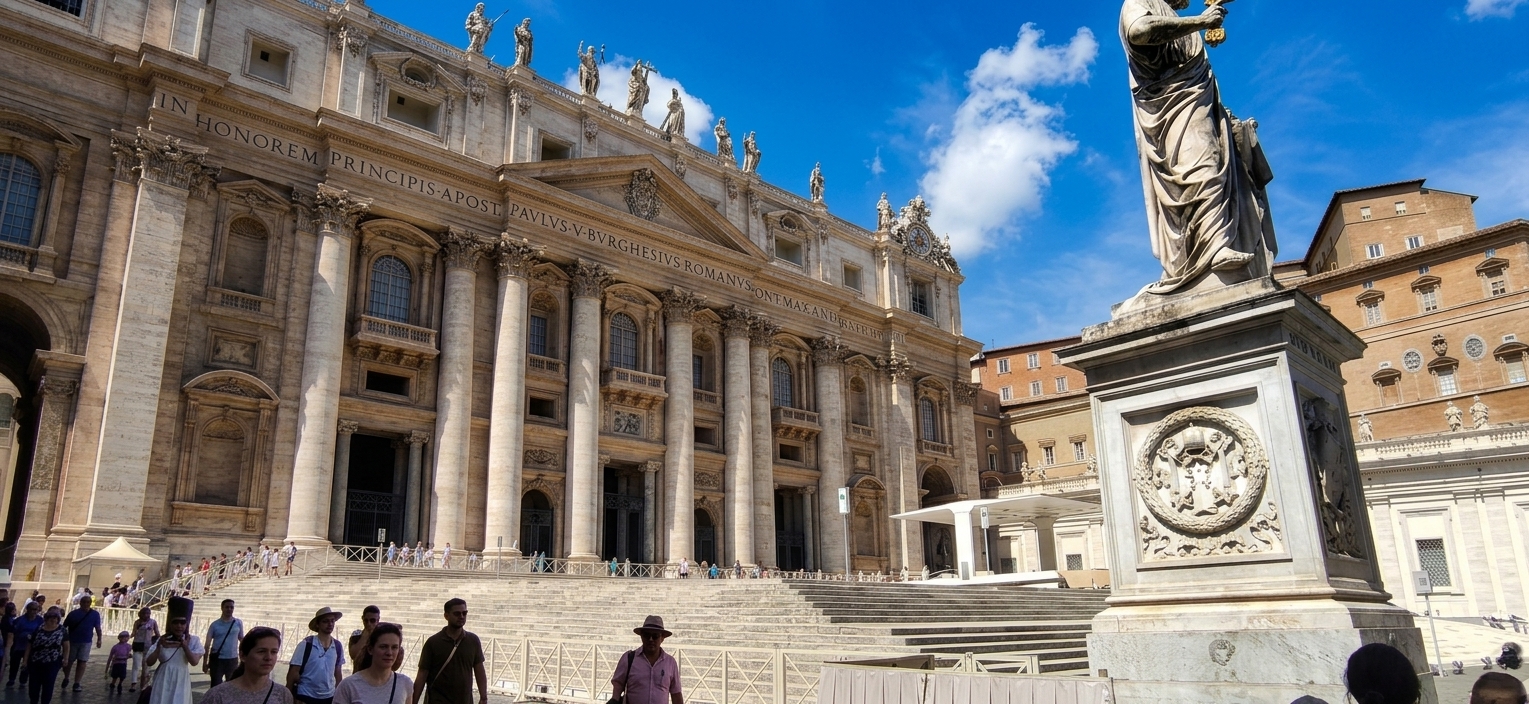
The Vatican has been the seat of the Popes since Saint Peter was buried on this hill in the 1st century AD. The original basilica was built here by the emperor Constantine in AD 326, on the site of Peter’s tomb. What you see today is the second St. Peter’s, begun in 1506 by Pope Julius II and completed 120 years later — the collective masterpiece of the greatest architects of the Renaissance and Baroque: Bramante, Michelangelo, Raphael, Maderno, Bernini.
Since 1929, the Vatican has been an independent state — the smallest in the world by both area and population, with its own postal service, radio station, army (the famous Swiss Guard in their striped uniforms), citizenship and coinage.
What to see
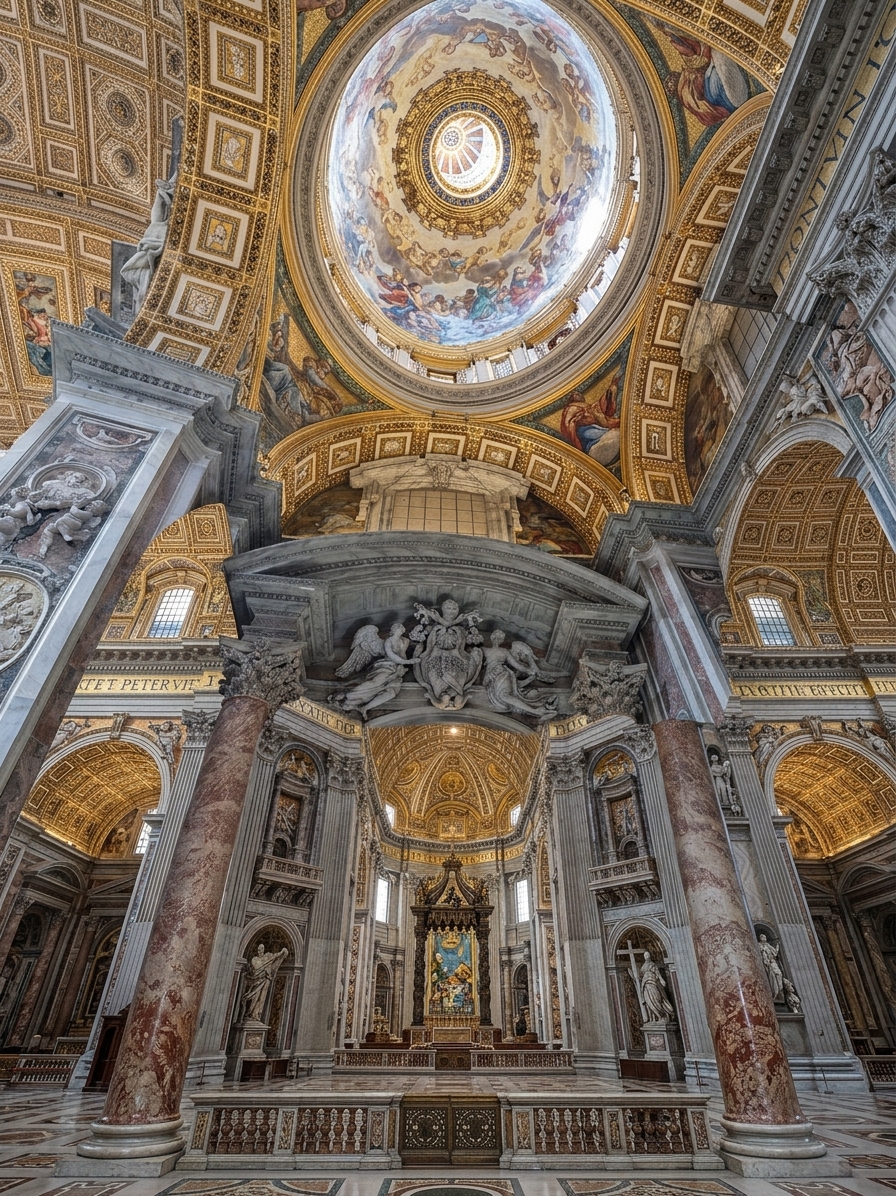
St. Peter’s Basilica. The largest church in the world by interior volume. Michelangelo’s dome soars 136 metres above the crossing. Beneath it, Bernini’s colossal bronze baldacchino rises over the tomb of Saint Peter. Immediately to the right of the entrance stands Michelangelo’s Pietà — carved when he was just twenty-four years old, and still one of the most quietly devastating sculptures in existence. Entry to the basilica is free.
The dome climb (la Cupola). For a small ticket, you can climb — partly on foot, partly by lift — to the top of Michelangelo’s dome, and step out onto the lantern for one of the most breathtaking views in Rome. On a clear day, the whole city lies beneath you, all the way to the Alban hills.
Piazza San Pietro. Bernini’s elliptical colonnade, built between 1656 and 1667, is designed like two great arms reaching out to embrace the faithful. Look for the two round marble discs set into the pavement of the square, halfway between the fountains and the central obelisk: stand exactly on one of them, and the four rows of columns of each colonnade align perfectly into a single row — an optical trick Bernini planted for you to discover four centuries ago.
The Egyptian obelisk. The great red-granite obelisk in the centre of the square, over four thousand years old, was brought to Rome by the emperor Caligula in AD 37 and stood in Nero’s circus — where Saint Peter is believed to have been crucified. In 1586, Pope Sixtus V had it moved here. The relocation alone took thirteen months, nine hundred men, one hundred and forty horses and forty-four winches. It is quite possibly the last thing Peter’s eyes ever saw.
The Vatican Museums and Sistine Chapel. More than nine kilometres of galleries containing one of the greatest art collections in the world, culminating in Michelangelo’s frescoes on the ceiling and end wall of the Sistine Chapel. On the way, don’t miss Raphael’s School of Athens in the Stanza della Segnatura, and the long spiral Momo Staircase near the exit — a Modernist masterpiece in its own right. Booking online well in advance is essential; the queue at the door can eat an entire morning.
The insider tip: the heart of stone
Somewhere in the pavement leading up to Piazza San Pietro, hidden among the thousands of black sanpietrini — the small square cobblestones that pave much of central Rome — lies a single stone carved in the shape of a heart. Nobody quite knows when or why it was placed there. Some say it is the private declaration of a stonemason. Others whisper it is a small gift to the pilgrims, quietly slipped in among the anonymous stones during a Vatican restoration.
Generations of Romans and visitors have made a game of finding it. Walk slowly, keep your eyes on the ground as you approach the square, and if you don’t spot it the first time — well, that just means you have a good reason to come back.
Practical information
- Where: Vatican City. Thirty minutes on foot from The Rabbit Hole along the Tiber, or a short ride on bus 62 or 271 to Piazza Pia.
- St. Peter’s Basilica: Free entry. Long queues at security — go early morning or late afternoon.
- Dress code: Shoulders and knees must be covered inside the Basilica and the Museums. Bring a light scarf if in doubt.
- Dome climb: Small ticket, purchased on site at the entrance to the right of the Basilica.
- Vatican Museums & Sistine Chapel: Book online in advance. Closed on Sundays except the last Sunday of each month, when entry is free — but expect very long queues.
- Combine with: Castel Sant’Angelo, a five-minute walk along Via della Conciliazione — the perfect afternoon companion to a Vatican morning.
Two thousand years of art, faith and power, packed into forty-nine hectares. And, if you are patient, one small stone heart in the pavement to tell you that even here, somebody wanted to leave a private mark. 🌿🕊️✨
#TheRabbitHoleRome #DiscoverRome #Vatican #StPeters #HiddenGems